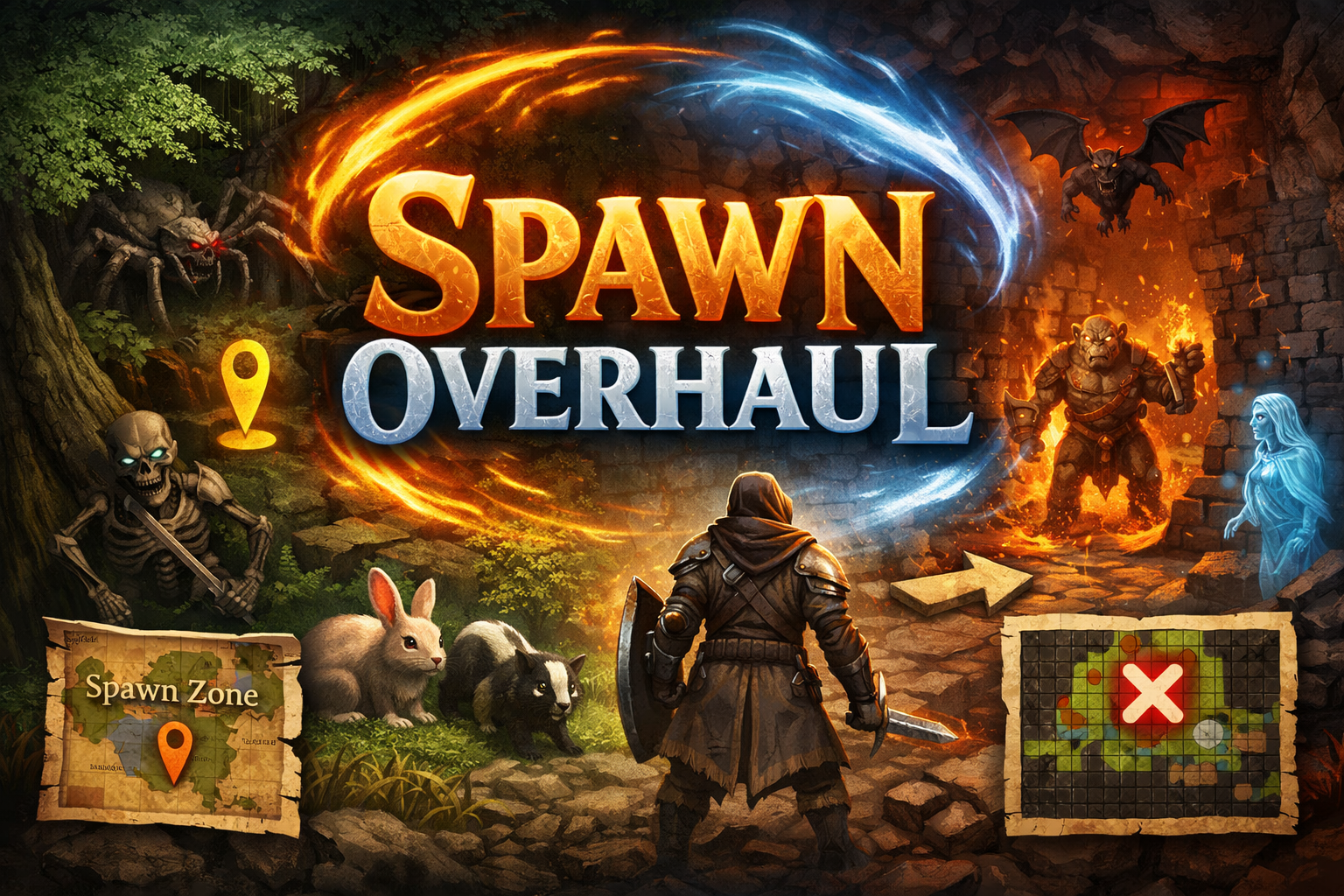
A Living World: How Spawns Work
The world you’re stepping into doesn’t rely on static monster spots or endless respawn loops. Instead, creatures appear naturally through an ambient zone system that reacts to player movement and activity.
Zones, Not Fixed Spots
Every area of the map is divided into invisible zones. These zones control what creatures can appear there, how often they show up, and under what conditions. Rather than monsters popping up at the same exact tile every time, spawns feel more organic and varied.
Two Types of Spawning
Area Spawns
Some creatures belong to a location itself. These monsters can appear within a defined region, making forests feel alive, caves feel dangerous, and fields feel inhabited rather than scripted.
Player-Reactive Spawns
Other creatures respond directly to player presence. As you move through certain areas, the world reacts — monsters may emerge nearby, approach from different angles, or appear based on how you’re facing and moving. This keeps encounters dynamic and less predictable.
Chance, Timing, and Variety
Not every creature appears every time. Each possible spawn has:
-
A chance to occur
-
A cooldown before it can appear again
-
The possibility of multiple creature types sharing the same area
This means two players passing through the same place at different times may experience completely different encounters.
A World That Responds
Some areas remain calm while players are present. Others grow more dangerous the longer you stay. Creatures don’t just appear endlessly — the system reacts to movement, presence, and events in the world, making exploration feel intentional rather than artificial.
What This Means for You
-
No fixed “grind tiles”
-
Less predictable encounters
-
More natural exploration
-
A world that feels aware of where you are
Every step you take matters. The world isn’t waiting for you — it’s watching, responding, and changing around you.
Rule of thumb, every 10-30 secs a spawn is happening!
Welcome in.